


Dealing with Shoulder Pain? Chiropractic Care in Surf City May Help
Shoulder pain doesn't just show up and leave. It lingers. It interferes with sleep, makes simple tasks harder, and turns routine movements into calculated risks. Most people assume rest will fix it. A week goes by. Then two. Then a month. And the pain's still there — maybe worse, maybe duller, but definitely not gone.
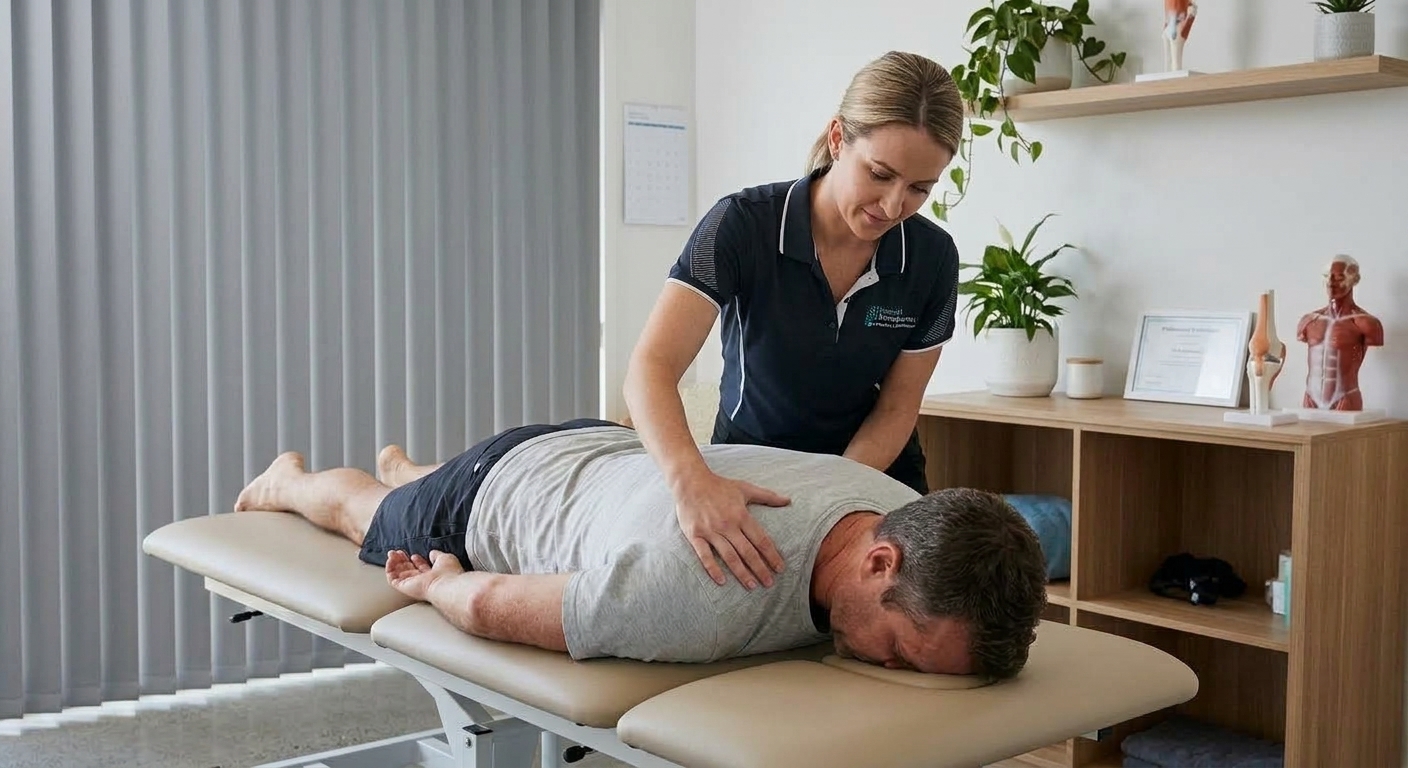
The shoulder joint is built for range, not stability. That's why it breaks down faster than people expect. Rotator cuff strain, tendinitis, impingement, bursitis — different names, same result. Limited mobility. Discomfort that radiates. And a growing frustration when nothing seems to help. Chiropractic care in Surf City offers a different approach — one that addresses the mechanics behind the pain, not just the symptoms on the surface.
Why the Shoulder Joint Breaks Down So Easily
Your shoulder moves more than almost any other joint in your body. That flexibility comes at a cost. The joint is held together by muscles, tendons, and ligaments — not bone. Which means when something gets out of alignment or overworked, the whole system compensates. And compensation leads to wear.
Poor posture accelerates the process. So does repetitive overhead motion. Sitting hunched over a desk all day pulls your shoulders forward, which tightens the chest and weakens the upper back. Over time, that imbalance creates tension in the rotator cuff and restricts how the shoulder blade moves. Add a sudden movement or heavy lift, and something gives. The pain that follows isn't always immediate — but it's almost always predictable.
What Chiropractic Adjustments Actually Do
Chiropractors don't just crack your back and send you on your way. When it comes to shoulder pain, the work starts with identifying where the joint isn't moving the way it should. That could be in the shoulder itself, the thoracic spine, the neck, or even the ribs. Everything's connected. And if one area is locked up, another picks up the slack.
Adjustments restore motion to those restricted areas. That takes pressure off the muscles that were overcompensating. It improves nerve function. And it gives the shoulder joint room to heal without constantly being pulled out of position. The goal isn't to force anything — it's to remove the interference so your body can do what it's designed to do.
- Spinal adjustments to improve thoracic mobility and posture
- Shoulder joint manipulation to restore alignment and range of motion
- Rib adjustments to support proper breathing mechanics and shoulder movement
- Cervical adjustments to reduce nerve irritation that may contribute to shoulder pain
Soft Tissue Work Makes the Difference
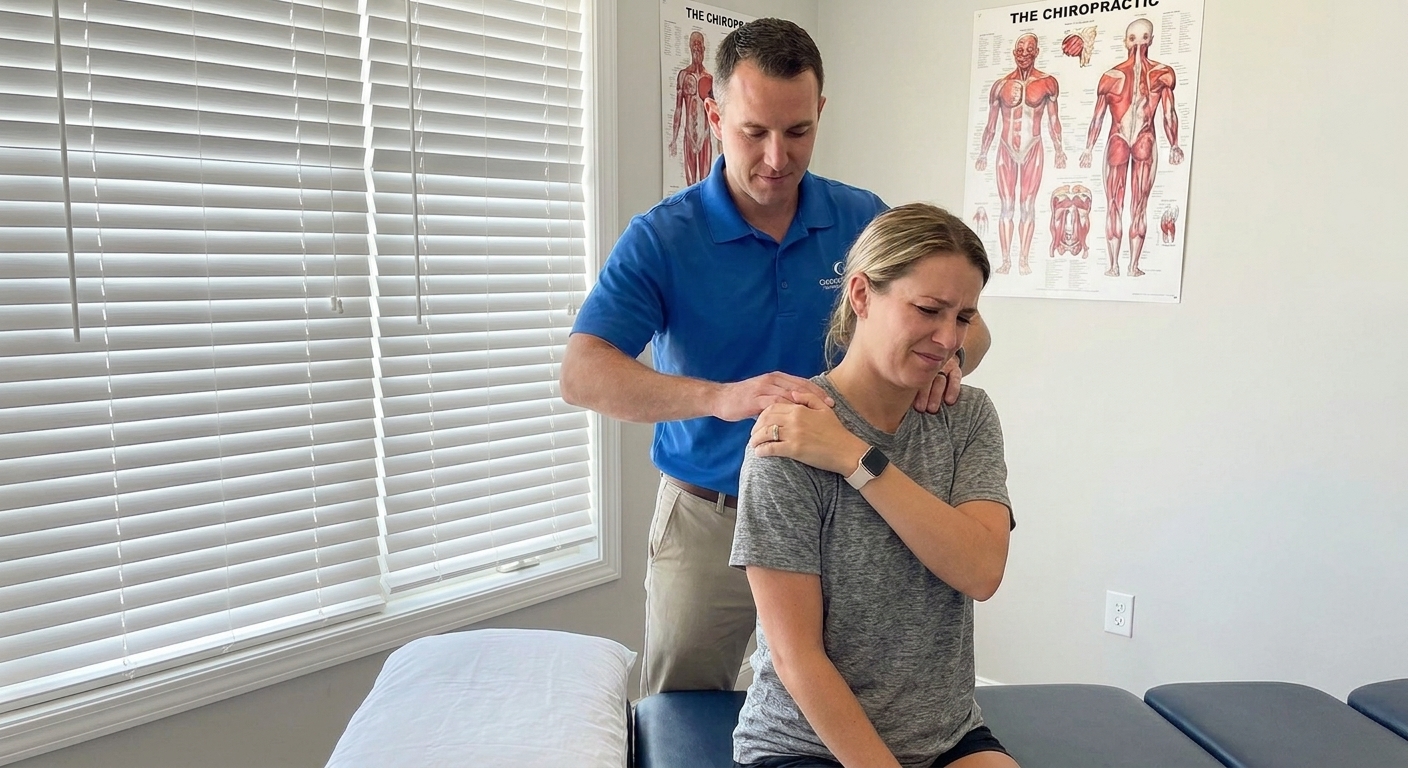
Adjustments get the bones moving. But if the muscles are tight, inflamed, or full of scar tissue, the pain comes right back. That's where soft tissue therapy steps in. Chiropractors use targeted techniques to break up adhesions, release trigger points, and improve blood flow to the injured area.
This isn't a relaxing massage. It's clinical work designed to restore function. Myofascial release, instrument-assisted soft tissue mobilization, and deep tissue therapy all play a role depending on what your shoulder needs. The result is less stiffness, better healing, and a joint that actually moves the way it's supposed to.
- Trigger point therapy to release muscle knots causing referred pain
- Myofascial release to address tightness in connective tissue
- Instrument-assisted techniques to break down scar tissue and improve tissue quality
- Stretching protocols to restore flexibility and prevent reinjury
Rehab Exercises Keep the Pain From Coming Back
You can't adjust your way out of weak stabilizers. If the muscles around your shoulder aren't strong enough to support proper movement, you'll end up right back where you started. That's why rehab is part of the plan — not an afterthought.
Your chiropractor will design exercises that target the rotator cuff, scapular stabilizers, and postural muscles. These aren't generic stretches pulled from the internet. They're tailored to your specific dysfunction and progressed as you improve. The goal is to build strength, control, and endurance so your shoulder can handle real-world demands without breaking down again.
- Rotator cuff strengthening to improve joint stability
- Scapular retraction exercises to correct posture and shoulder mechanics
- Mobility drills to maintain range of motion during recovery
- Functional movements that mimic daily activities and prevent compensation patterns
When to Stop Waiting and Get Help
Most people wait too long. They ice it. They take anti-inflammatories. They avoid using the arm and hope it magically gets better. Sometimes it does. Most of the time, it doesn't. And the longer you wait, the more compensations your body builds — which makes recovery harder and slower.
If your shoulder pain has lasted more than a week or two, it's worth getting evaluated. If you can't lift your arm overhead, sleep on that side, or reach behind your back without discomfort, that's a sign something's off mechanically. And if you're dealing with numbness, tingling, or weakness, don't gamble. Get it checked.
- Pain lasting longer than two weeks without improvement
- Limited range of motion that interferes with daily tasks
- Discomfort that worsens with specific movements or positions
- Numbness, tingling, or weakness in the arm or hand
- Previous injuries that never fully healed
Why Surf City Patients Choose Chiropractic Care
We've worked with athletes, manual laborers, desk workers, and weekend warriors. The one thing they all have in common? They want results that last. Not temporary relief. Not a prescription that masks the problem. They want their shoulder to work again — without surgery, without downtime, and without guessing.
Chiropractic care in Surf City delivers that. It's hands-on, personalized, and focused on fixing the root cause. You're not a number. You're not shuffled through a cookie-cutter protocol. You get a plan built around your pain, your goals, and your body's specific needs. And you get support every step of the way — from the first adjustment to the last rehab session and beyond.
Shoulder pain is manageable when you treat it the right way. That means addressing alignment, restoring mobility, rebuilding strength, and correcting the habits that caused the breakdown in the first place. Skip any of those steps, and you're setting yourself up for a relapse. But get it right, and you'll be back to full function faster than you thought possible.
Let’s Get You Moving Again
Shoulder pain doesn’t have to dictate your days or keep you from doing what you love. Together, we can find the root of your discomfort and build a plan that gets you back to feeling strong and confident. If you’re ready to take the next step, give us a call at 910-702-4476 or schedule an appointment—let’s start your recovery today.
‹ Back
Recent Posts
-

Dealing with Shoulder Pain? Chiropractic Care in Surf City May Help
October 26, 2026
-
Can Chiropractic Care in Surf City Help with Sciatica?
October 12, 2026
-

Still Feeling Sore After an Accident in Surf City?
September 28, 2026
-
Could Chiropractic Care in Surf City Help Improve Your Posture?
September 14, 2026
-
Is Your Sports Injury in Surf City Taking Longer to Heal?
August 31, 2026

